
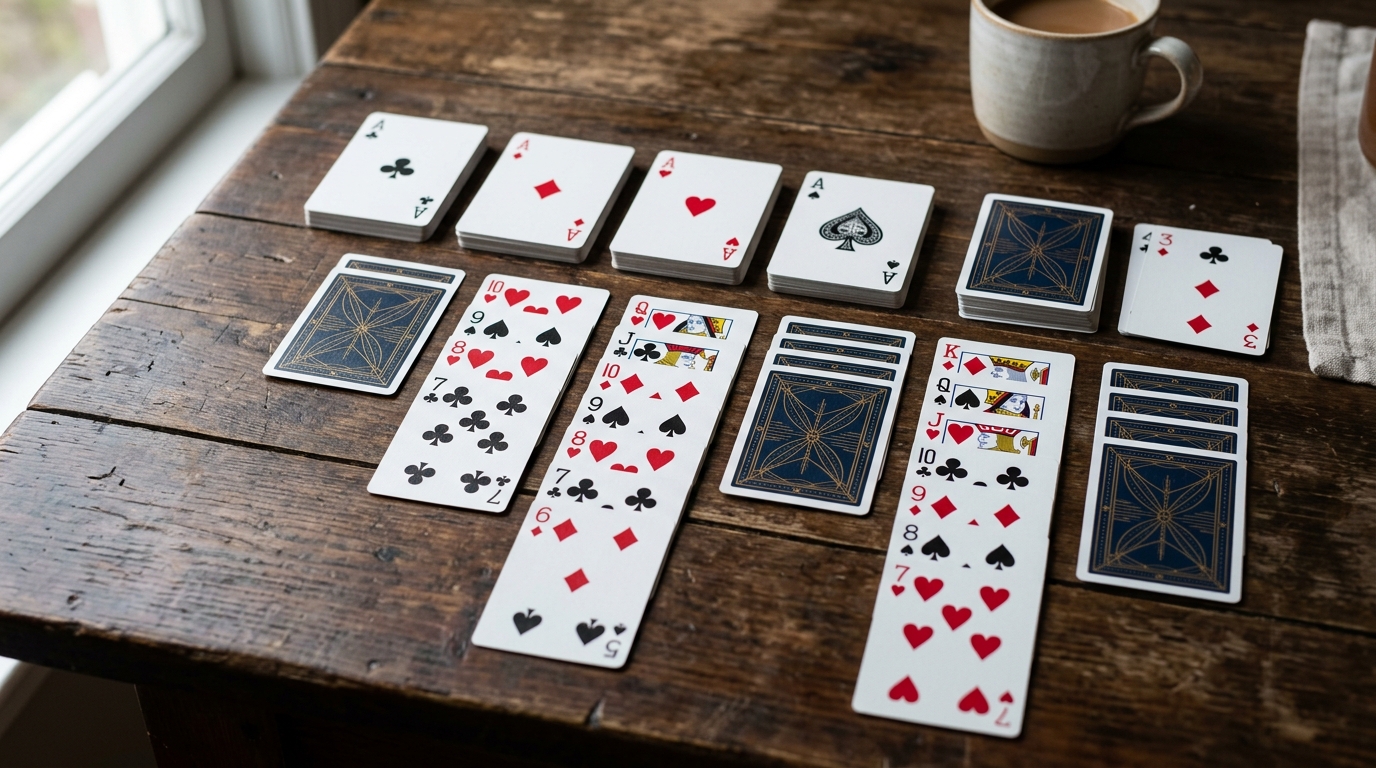
Free Solitaire Online sits at the meeting point of an old puzzle tradition and a very modern habit: opening a browser for a few quiet minutes. The screen version keeps the old game’s quiet appeal while making a new deal available whenever a player has a few minutes. The history is worth knowing because it explains why this format survived changes in paper, software, and screen size. A game that can move between those settings has more going for it than a catchy name. It has a clear promise, a small learning curve, and enough room for a player to improve.
Free Solitaire Online in practice
Patience became a familiar screen ritual
Solitaire belongs to the broad patience tradition of single-player card games, but its modern cultural reach comes from software. Microsoft included Klondike Solitaire with Windows 3.0 in 1990, and the game became a quiet introduction to personal computers for millions of people. It taught mouse skills, gave an idle minute a clear shape, and asked for no opponent, account, or installation beyond the machine already on the desk.
The card rules were older than the operating system, but the context was new. A green table on a monitor became part of office life, home computers, and waiting time. Familiarity turned into a strength because players could return after years away and still know what a red seven could do.
Why the old layout keeps adapting
Browser and mobile versions kept the same visual language while adding options such as draw-one, draw-three, scoring, undo, and daily challenges. The game did not need a new identity for every platform. It needed a clean layout and a reliable deal. That low friction is a large part of its staying power.
The best digital versions also make learning visible. A player can replay a board, notice when a foundation move was premature, and understand why exposing a hidden card mattered more than making the tableau look tidy.
Keep the history connected to play
Play a classic card game on Easy Daily Puzzle or browse more Solitaire posts on this site. Microsoft’s history of Solitaire explains the Windows connection, while Britannica’s patience overview gives the broader card-game context.
What the older format still teaches
Before moving a card, read the tableau as a set of future spaces. A face-down card that can be exposed, a column that can be emptied, or a sequence that can receive several ranks is usually more valuable than a move that only makes the layout look tidy. The best legal move is often the one that leaves the most useful next move.
Keep the waste pile and foundations in view. In draw-three play, remember which useful card sits below the visible one when possible. In every mode, check whether sending a low card home removes a color or rank needed in the tableau. A foundation is safe storage, but the tableau is where the board changes.
When a deal fails, review the first decision that closed a lane or buried a useful card. Do not only replay the final few moves. The late problem is often the result of an early convenience move that looked harmless at the time. A short review makes the next deal feel less like luck and more like a sequence you can read.
For a calm daily test, start a Solitaire game on Easy Daily Puzzle and browse more Solitaire tips on this site. Set one goal for the session: expose more hidden cards, preserve a column, or delay one foundation move. A narrow goal keeps the game useful without turning it into a chore.
The small detail worth remembering
The most useful Solitaire habit is to separate movement from progress. A card can move without improving the position. Look for reveals, usable spaces, and sequences that keep options open. That simple filter makes familiar deals feel more deliberate.
A daily card game does not need a perfect win rate to be worthwhile. If the board helps you notice timing, order, and the cost of a convenient move, the session has already given you something to use on the next deal.
When in doubt, prefer the move that keeps more cards available. A tidy foundation is satisfying, but an open tableau usually gives the next decision more room.
For a little more context, read Microsoft Solitaire history and Patience card game overview. These references are useful for checking the basic history or rules without turning a daily game post into a long reference list.