
Solitaire patience history gives players an engaging window into why solitaire continues to captivate millions of minds around the world every single day. Whether you are solving on a crowded morning train, taking a quiet lunch break at your desk, or winding down before sleep, a single puzzle session offers a rare moment of clean focus in a noisy digital environment. On Free Solitaire Online, the goal is always to connect curious puzzle lovers with both entertaining stories and practical habits that make the next round more satisfying.
You can jump straight into a fresh grid right now on the Free Solitaire Online playable main page. If you enjoy exploring a broader variety of classic daily challenges across different genres, be sure to visit Easy Daily Puzzle or browse the full collection of solitaire puzzles on Easy Daily Puzzle.
Solitaire patience history: the story and cultural journey of solitaire
Classic Solitaire, historically known as Klondike or Patience, has roots extending back to eighteenth-century northern European card traditions. Literary mentions appear in French and German texts from the 1780s, where solitary card arrangements were associated with fortune-telling and quiet parlor contemplation. The name Klondike emerged in late nineteenth-century North America, popularized by gold prospectors passing long subarctic winter nights during the Yukon gold rush. Its modern digital era began in the summer of 1989 when Microsoft intern Wes Cherry programmed a digital version of Klondike to help users intuitively learn graphic user interface mechanics like clicking, dragging, and dropping with a computer mouse. Inducted into the World Video Game Hall of Fame, the game transformed an old card pastime into a global cultural fixture.
Understanding this background enriches how we view Solitaire patience history on modern screens. What began as a quiet physical pastime on paper or wooden tables has successfully reinvented itself across generations without losing its core identity. Every move, placement, or clue decoded today connects back to that rich tradition of patient problem solving. When players recognize the origins and milestones of their favorite games, everyday sessions feel less like isolated digital clicks and more like participating in a living, centuries-old worldwide community of puzzle enthusiasts.
Historical records and trusted sources behind Solitaire patience history
Reliable research helps separate popular mythology from documented puzzle history. For readers who want to verify historical records, competition rules, or archival articles, authoritative resources such as Bicycle Cards official Klondike Solitaire rules and David Parlett on historical patience card games offer deep factual context on how these pastimes matured into international standards. Consulting primary sources ensures that we appreciate both the creators and the vibrant communities who keep these games flourishing. Whether exploring competition archives, original patent documents, or early newspaper syndication records, solid evidence reminds us that thoughtful design stands the test of time.
How Solitaire patience history transforms player choices in real games
Picture a Klondike deal where an Ace and Two are ready to fly up to the foundation, while half the tableau piles remain face down. The reflex is sending those cards upstairs immediately to secure quick points. Remembering Solitaire patience history suggests keeping those low cards useful in the tableau for an extra turn if they can help reveal a deeper hidden card. Premature foundation moves often lock out essential tableau transfers that could unlock a stuck game.
Casual card mastery is all about pacing. When you prioritize uncovering hidden information over superficial tidiness, even tricky deals reveal pathways to victory. Holding cards in the tableau gives you flexible stepping stones that keep your options alive until the stock reveals its crucial dependencies.
Essential player habits connected to Solitaire patience history
- Survey the entire tableau before making the first obvious legal card move.
- Uncover buried cards in long tableau columns before rushing cards up to foundations.
- Reserve open lanes for Kings that unlock the most substantial piles of hidden cards.
- In draw-three games, memorize the sequence of cards moving through the waste pile.
Why visual clarity enhances Solitaire patience history
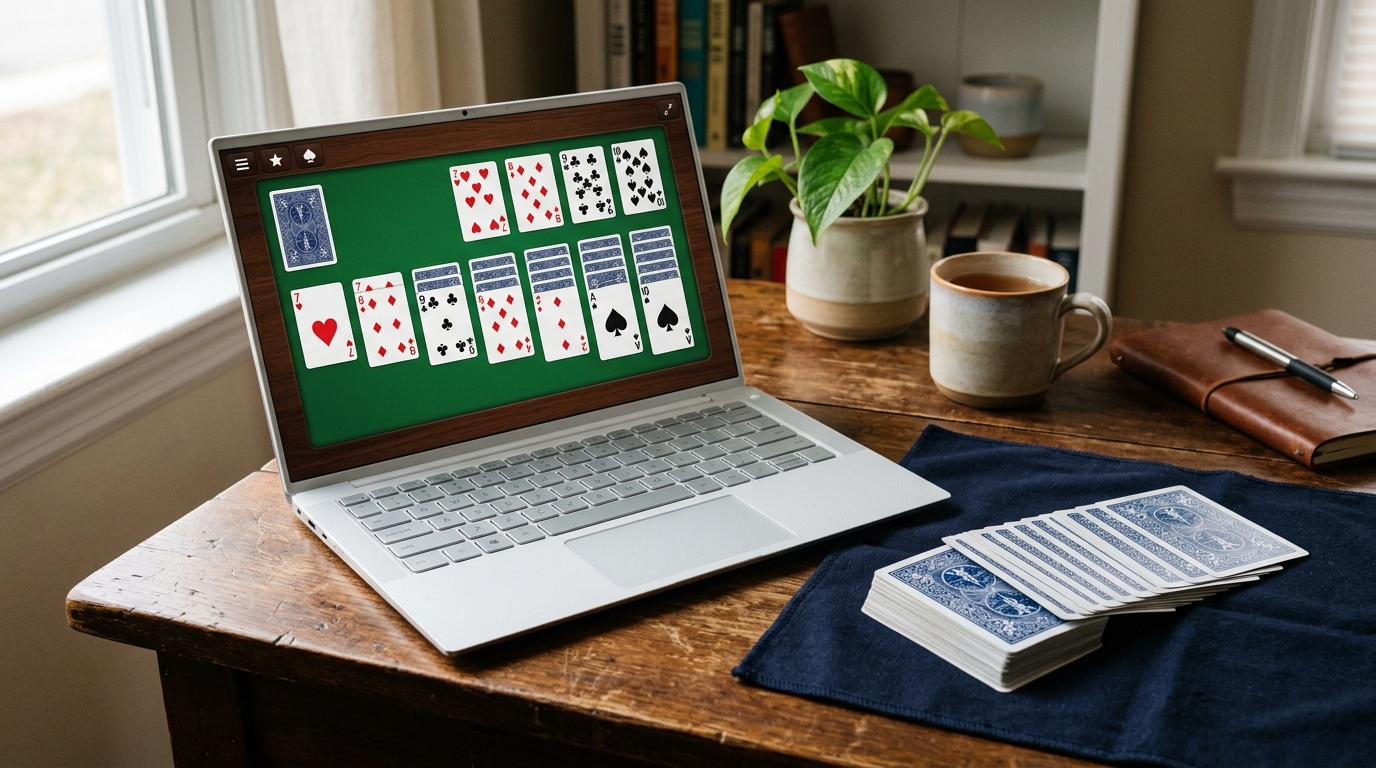
A clean visual presentation makes all the difference when enjoying solitaire online. The featured illustration accompanying this article is chosen to highlight the focused atmosphere of play, free from distracting clutter or confusing brand marks. Having an accurate visual reference paired with descriptive alt text celebrating Solitaire patience history ensures that readers can immediately grasp the game state and follow along comfortably. Whether on desktop monitors or mobile screens, crisp contrast and uncluttered design help keep your attention centered on the puzzle itself.
Taking your next step with Solitaire patience history
The most rewarding way to experience the benefits of Solitaire patience history is to test these insights in an actual round today. Head over to Free Solitaire Online to enjoy a relaxing session with fresh perspective, focusing on deliberate choices rather than rushing the clock. Whenever you feel like broadening your horizons with crosswords, jigsaws, or classic card games, explore the Easy Daily Puzzle game library for endless daily variety. Great puzzle solving is not about chasing frantic records; it is about the quiet satisfaction of bringing order to a scattered board, one thoughtful move at a time.